Eyelid Surgery
Blepharoplasty and Eyelid Lift Surgery
Blepharoplasty, often called eyelid lift surgery, is used to improve heavy or hooded upper eyelids, excess eyelid skin and under-eye bags.
The aim is to help you look fresher and more rested while preserving your natural eye shape and protecting the health of your eyes.
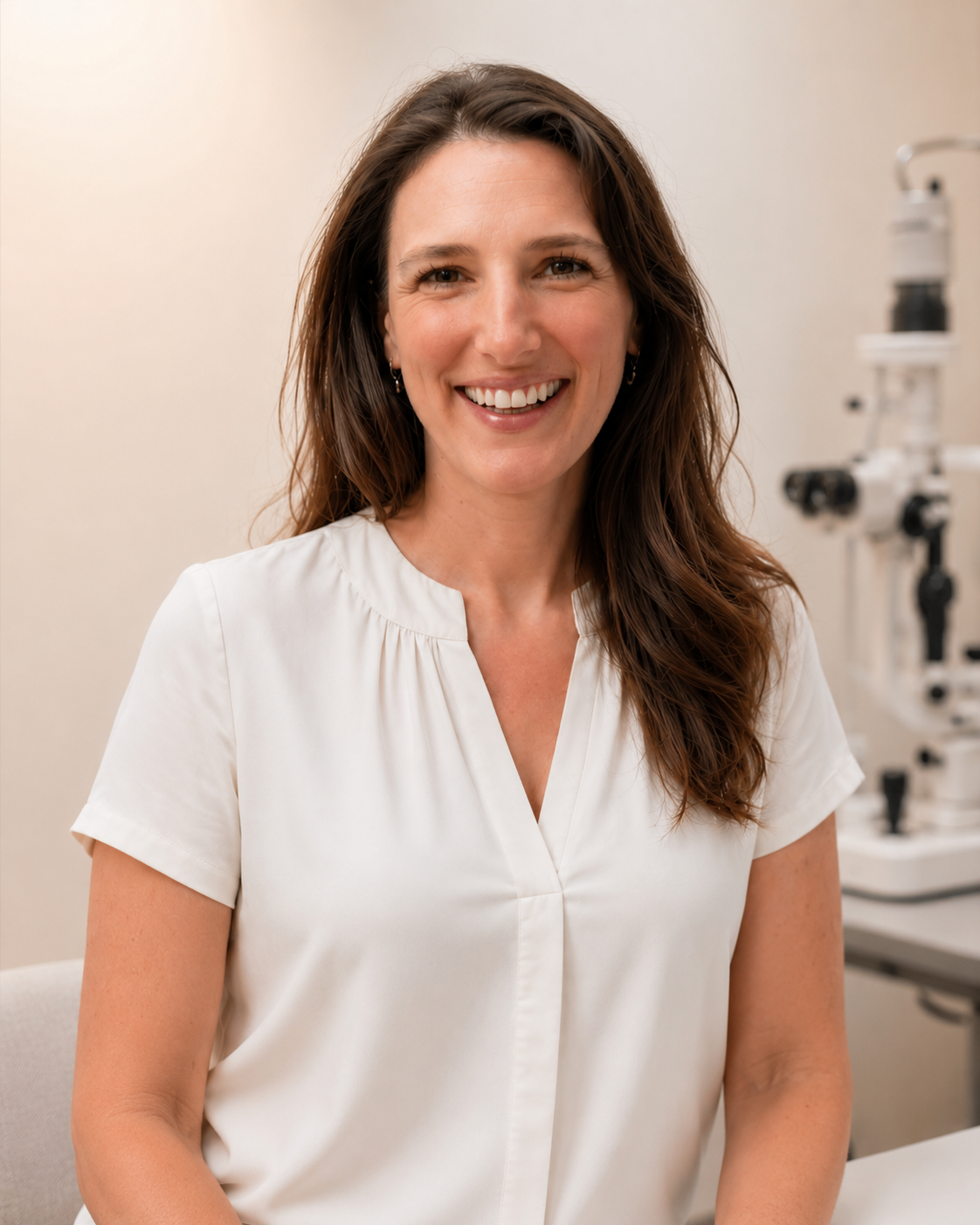
Dr Hannah Timlin offers specialist upper blepharoplasty, lower blepharoplasty and combined eyelid surgery in London. As a consultant ophthalmic and oculoplastic surgeon, she plans eyelid surgery with careful attention to appearance, eyelid function, eye comfort and dry eye risk.
Consultant at Moorfields Eye Hospital · GMC 6134773 · Surgery performed personally by Dr Timlin
At a glance
A quick summary of who blepharoplasty is for, how it is performed and what to expect.
What is blepharoplasty?
Blepharoplasty is eyelid surgery to remove or reposition excess skin, muscle or fat from the upper eyelids, lower eyelids or both.
Upper eyelid blepharoplasty is commonly used to improve heavy or hooded upper lids, where excess skin can sit on the eyelid crease or lashes. In some cases, surgery may also help when excess skin contributes to heaviness or affects the upper field of vision.
Lower eyelid blepharoplasty is used to improve true under-eye bags, puffiness and selected lower-lid contour concerns.
Not every tired-looking or "droopy" eye is best treated with blepharoplasty. Sometimes the issue is eyelid ptosis, brow descent, dry eye, lower-lid laxity, fluid-related puffiness or previous filler. A specialist consultation helps identify the cause of your concern and whether blepharoplasty is the right treatment.
Why choose an eye surgeon for eyelid surgery?
The eyelids are delicate structures. They do not just affect appearance; they protect the eyes, spread the tear film and help maintain comfortable vision.
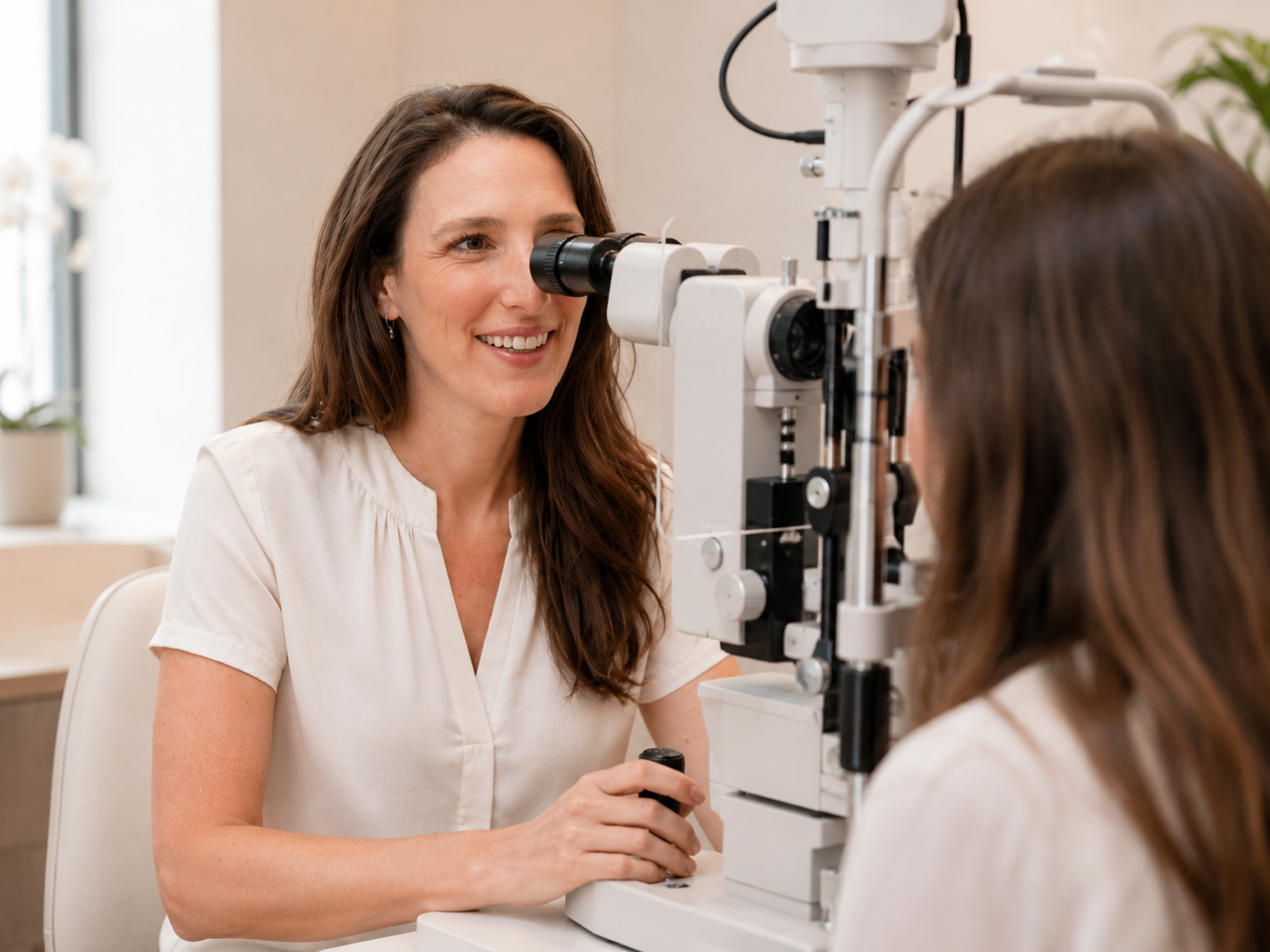
Dr Hannah Timlin is a consultant ophthalmic surgeon with specialist training in oculoplastic surgery, which is surgery of the eyelids, tear ducts and structures around the eye. Her assessment considers not only how the eyelids look, but also how they function.
Before recommending surgery, she will assess factors such as eyelid position, eyelid closure, brow position, ptosis, asymmetry, dry eye symptoms, ocular surface health and lower-lid support.
This eye-surgery perspective helps determine whether blepharoplasty is the right procedure, whether another approach would be safer or more effective, and how treatment can be planned with both appearance and eye health in mind.
Types of blepharoplasty
Blepharoplasty can be performed on the upper eyelids, lower eyelids or both, depending on your anatomy and concerns.
Upper eyelid blepharoplasty
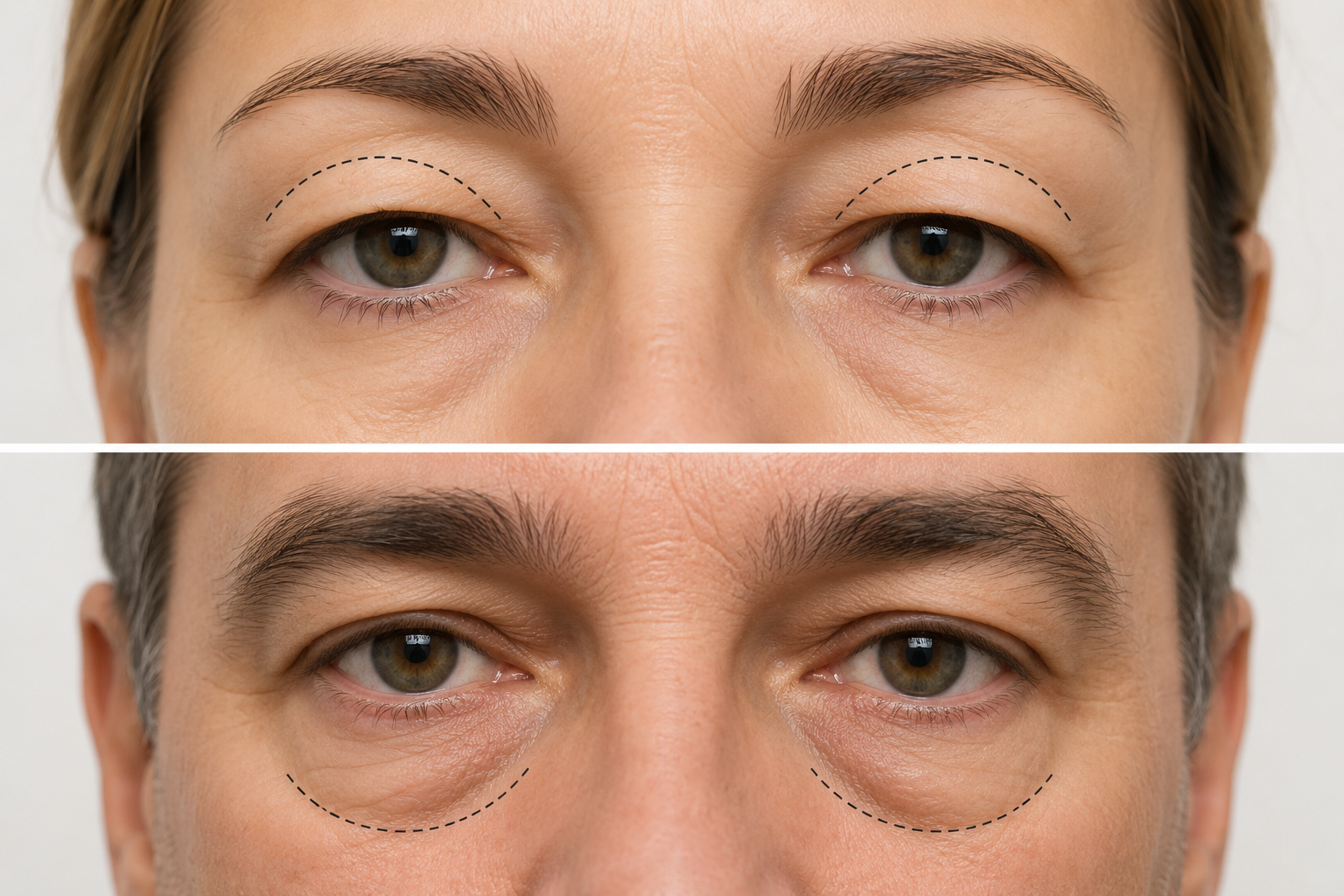
Upper eyelid blepharoplasty is used to improve heavy or hooded upper lids caused by excess skin and, in some cases, underlying tissue or fat. Patients often describe their eyelids as feeling heavy, looking tired, resting on the lashes or making eye make-up harder to apply.
The incision is usually placed within the natural upper eyelid crease, helping the scar settle discreetly over time. A carefully planned amount of tissue is removed or adjusted to create a more open, refreshed appearance while preserving eyelid function.
A specialist assessment is important because upper-lid heaviness is not always caused by excess skin alone. Ptosis or brow descent may need a different or combined approach.
Lower eyelid blepharoplasty
Lower eyelid blepharoplasty is used to improve under-eye bags, puffiness and selected lower-lid contour concerns. Depending on your anatomy, surgery may involve repositioning or reducing lower-lid fat, tightening a small amount of skin, and supporting the lower eyelid where needed.
Lower-lid surgery requires careful planning because eyelid position, lid laxity, dry eye risk and the natural shape of the eye all matter. Previous tear-trough filler or previous eyelid surgery can also affect the safest approach.
The aim is to create a fresher lower-lid contour while preserving eye comfort, eyelid support and a natural appearance.
Combined upper and lower blepharoplasty
Some patients are suitable for upper and lower eyelid surgery at the same time. This may be appropriate when both upper-lid hooding and lower-lid bags are contributing to a tired appearance.
Combined surgery can be convenient because it involves one treatment plan and one recovery period. However, it is not automatically the best option for everyone. Patients with dry eye, eyelid laxity, asymmetry or more complex anatomy may sometimes be better treated with a staged approach.
Is blepharoplasty right for me?
Blepharoplasty may be suitable if you have excess upper eyelid skin, hooded eyelids, heavy lids or under-eye bags, and your eyelid function and eye surface are suitable for surgery.
It may not be the right first treatment if your main concern is caused by eyelid ptosis, brow descent, uncontrolled dry eye, fluid-related puffiness, skin texture change, under-eye hollowing without true bags, or previous filler affecting the lower eyelid area.
During your consultation, Dr Timlin will assess your eyelids, brow position, eyelid height, lower-lid support and ocular surface health before advising whether blepharoplasty is likely to help.
In some cases, the best option may be upper blepharoplasty, lower blepharoplasty or combined surgery. In others, ptosis repair, brow surgery, dry eye treatment, filler dissolution, a non-surgical approach or no treatment may be more appropriate.
The aim is to recommend the right treatment for your anatomy, symptoms and goals, not simply to offer surgery because someone has asked for an "eyelid lift".
"I had ptosis surgery and an upper blepharoplasty with Dr Hannah Timlin at the Ezra Clinic. I am absolutely delighted with the results. The ptosis surgery has been a complete success and combined with the upper blepharoplasty it has given my face a more fresh, natural and brighter appearance."
Verified patient review, Trustpilot · Ptosis surgery & upper blepharoplasty
Unsure which applies to you? A specialist assessment will give you a clear answer, with no pressure to proceed.
Book a ConsultationYour consultation
Your consultation with Dr Timlin will include a discussion of your concerns, goals, medical history and any eye symptoms, such as dryness, watering, irritation or visual obstruction.
She will examine your eyelids and eyes, including eyelid position, brow position, symmetry, skin excess, lower-lid support and ocular surface health. This helps determine whether blepharoplasty is the right treatment, or whether another approach may be more appropriate.
Dr Timlin will explain the options available to you, including the likely benefits, limitations, risks, recovery and fees. You will have time to consider your options before deciding whether to proceed.

Recovery after blepharoplasty
Blepharoplasty is usually performed as day-case surgery. Most patients experience bruising, swelling and some tightness or irritation around the eyes in the first few days. Swelling often peaks early before gradually settling.
Many patients return to desk-based work within around one to two weeks, although recovery varies depending on whether you have upper eyelid surgery, lower eyelid surgery or combined surgery. Lower-lid and combined procedures can take longer to settle than upper-lid surgery alone.
You will be given clear aftercare advice, including guidance on wound care, make-up, contact lenses, exercise and driving. Final healing continues gradually, and scars and swelling can continue to settle over several weeks to months.
Risks and realistic expectations
Blepharoplasty can create a meaningful, natural-looking improvement in carefully selected patients, but all surgery carries risk.
Common temporary effects include bruising, swelling, mild soreness, tightness, watery eyes, irritation and blurred vision from ointment.
Less common risks include dry eye symptoms, asymmetry, visible scarring, under-correction or over-correction, difficulty closing the eyes, lower-lid malposition, infection, bleeding or the need for further surgery. Serious visual complications are very rare.
Blepharoplasty does not stop the ageing process and it is not the right treatment for every tired-looking or droopy eye. Dr Timlin will explain what surgery can realistically improve, what it cannot reliably change, and which risks are most relevant to your eyes and general health.
Fees and self-pay treatment
Cosmetic blepharoplasty is usually self-funded. Functional upper eyelid surgery may occasionally be covered by private medical insurance if excess eyelid skin is significantly affecting vision and the insurer's criteria are met.
As a guide, blepharoplasty fees typically range from £3,500 to £6,500. The exact fee depends on whether surgery involves the upper eyelids, lower eyelids or both, the type of anaesthetic used, hospital fees and whether any additional procedure is required, such as ptosis repair, brow support or lower-lid support. Full guide prices are published on the patient information page.
After your consultation, you will receive a personalised treatment plan and quotation explaining the recommended procedure, expected costs and what is included.
Fee guidance is also available when you book your consultation, so there are no surprises.
Book a ConsultationBlepharoplasty FAQs
Blepharoplasty treats excess eyelid skin, muscle or fat. Ptosis surgery treats an eyelid that sits too low because of the eyelid-lifting mechanism. Some patients need one procedure; others may need both.
Yes, if the hooding is caused mainly by excess upper eyelid skin. If brow descent or ptosis is contributing, a different or combined approach may be more suitable.
Lower blepharoplasty can improve true under-eye bags caused by lower-lid fat prominence or selected contour issues. Puffiness caused by fluid retention, allergy or previous filler may need a different approach.
The aim is usually to refresh the eyelids while preserving your natural eye shape. Lower-lid surgery requires careful planning because eyelid support and laxity can affect eye shape.
Possibly, but dry eye symptoms need careful assessment before surgery. The treatment plan may need to be modified, staged or avoided if the risk to comfort is too high.
Many patients return to desk-based work within around one to two weeks, although bruising and swelling can take longer to settle, particularly after lower-lid or combined surgery.
Incisions are usually placed in natural eyelid creases, below the lashes or inside the lower eyelid, depending on the procedure. Scars usually fade, but no surgery is completely scarless.
Most patients describe tightness, tenderness or discomfort rather than severe pain. You will be given advice on pain relief and aftercare.
Yes, in suitable patients. However, combined surgery is not right for everyone, and some patients are safer or better served by staging procedures.
No referral is needed for self-pay consultations; you can book directly. If you hope to use private medical insurance, your insurer may require a referral, photographs, visual-field testing or other supporting information.
Book a Consultation
If you are considering upper eyelid blepharoplasty, lower eyelid blepharoplasty or combined eyelid surgery, a specialist consultation can help clarify what is causing your concern and what treatment is most appropriate.
Dr Hannah Timlin will assess your eyelids, brow position, eye surface and overall suitability before advising on the safest and most natural-looking approach.
Reviewed by Dr Hannah Timlin, Consultant Ophthalmic and Oculoplastic Surgeon (GMC 6134773). For general information only, not medical advice.