Eyelid Surgery
Brow Lift Surgery
A brow lift raises a low or heavy brow to open up the eyes and soften a tired or heavy appearance. A descended brow is a common, and often overlooked, cause of heaviness around the upper eyelids.
The aim is a natural, refreshed result that suits your face, rather than an over-lifted or surprised look.
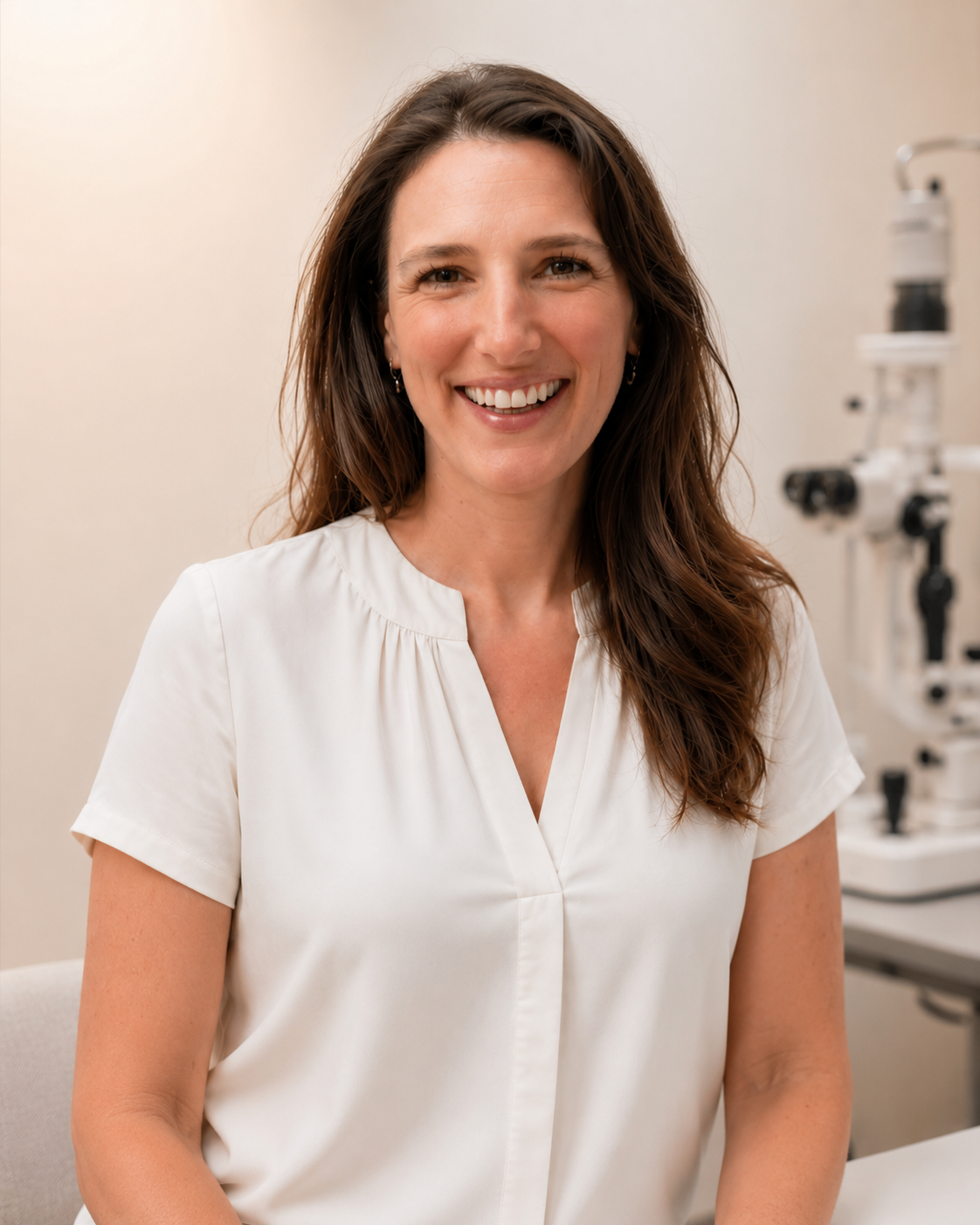
Dr Hannah Timlin offers specialist brow lift surgery in London. As a consultant ophthalmic and oculoplastic surgeon, she assesses the brow alongside the eyelids and the eye itself, so that treatment addresses the true cause of heaviness with attention to balance, symmetry and eye comfort.
Consultant at Moorfields Eye Hospital · GMC 6134773 · Surgery performed personally by Dr Timlin
At a glance
A quick summary of what a brow lift is, how it is performed and what to expect.
What is a brow lift?
A brow lift, also called a forehead lift, raises and reshapes the position of the eyebrows. With age the brow can gradually descend, particularly at the outer edge, which can make the eyes look heavy, tired or cross.
A low or heavy brow is one of three common reasons the upper eyes can look heavy. The others are excess upper-eyelid skin, treated with blepharoplasty, and a drooping eyelid, treated with ptosis repair. These often occur together, and telling them apart is the key to choosing the right treatment.
When the brow is the main problem, removing eyelid skin alone may not give a balanced result and can sometimes pull the brow down further. A specialist assessment identifies how much of the heaviness comes from the brow, the eyelid skin and the eyelid itself.
Why choose an eye surgeon for a brow lift?
The brow sits in a delicate balance with the eyelids and the surface of the eye. Lifting it changes eyelid height and how fully the eyes close, so the brow cannot be treated in isolation.
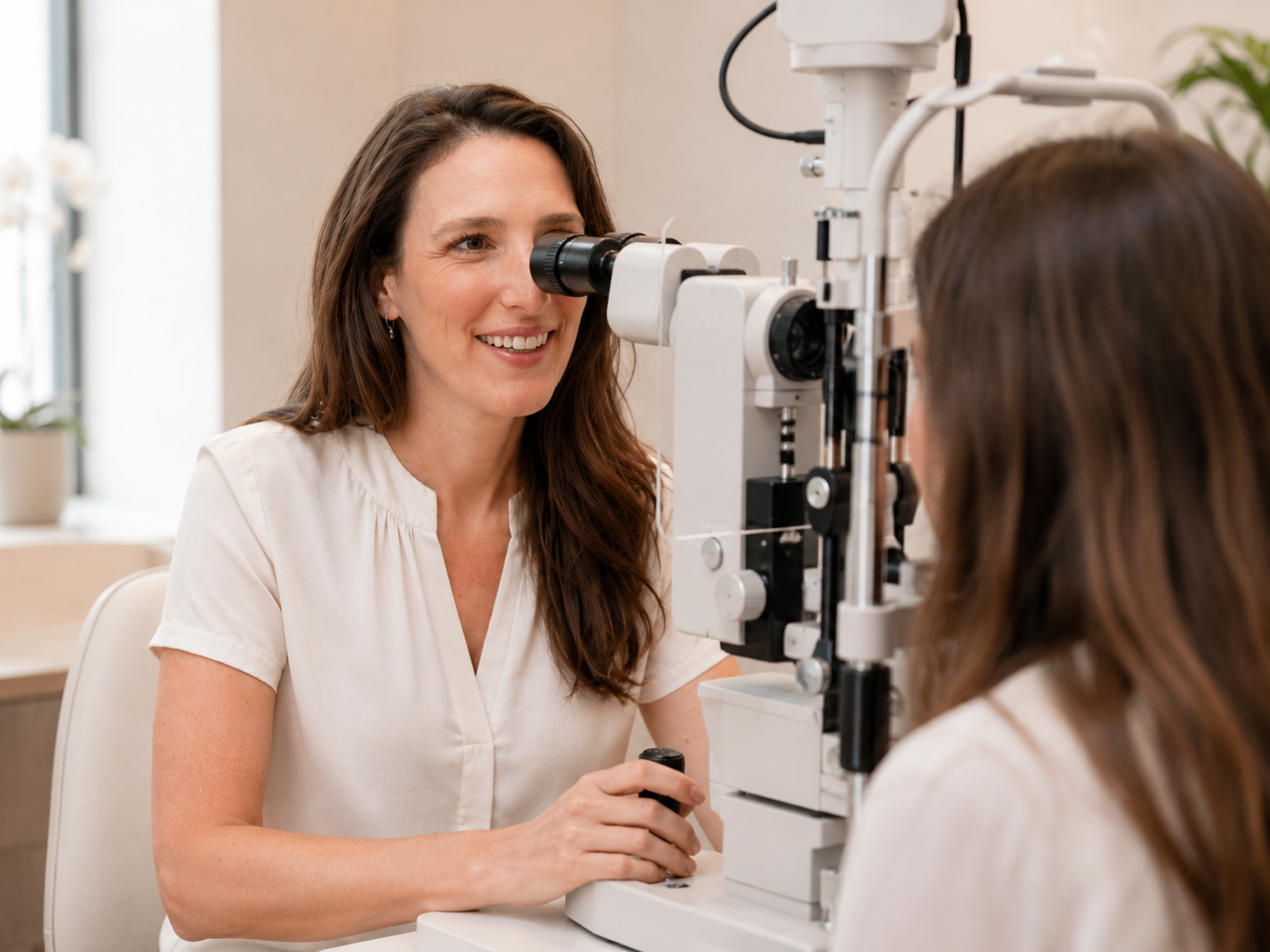
Dr Hannah Timlin is a consultant ophthalmic surgeon with specialist training in oculoplastic surgery, which is surgery of the eyelids, tear ducts and structures around the eye. She assesses the brow, the eyelids and the eye together.
Before recommending treatment, she will assess brow height and symmetry, the position and skin of the upper eyelids, eyelid closure, eye-surface health and the way you raise your brow.
This eye-surgery perspective helps determine whether a brow lift, eyelid surgery, or a combination, will give the most natural and balanced result, while protecting the comfort of your eyes.
Types of brow lift
The right technique depends on the degree and pattern of brow descent, your forehead and hairline, and whether eyelid surgery is being carried out at the same time.
Direct brow lift
Through an incision placed just above the eyebrow, the brow is lifted to a precise, stable position. This gives strong, predictable correction and is often used for more pronounced or asymmetric brow droop. It leaves a fine scar at the upper edge of the brow, which usually settles well over time.
Endoscopic brow lift
Using small incisions behind the hairline and a camera to guide the surgery, the forehead and brow are gently lifted and re-secured. Scars are hidden in the hairline. It suits selected patients with a suitable forehead height and hairline.
Temporal (lateral) brow lift
This focuses on the outer part of the brow, where hooding is often most noticeable. It can be a more limited procedure and is sometimes combined with upper eyelid surgery.
Internal browpexy
When the brow needs support or a modest lift rather than a large change, it can be stabilised through the same incision used for upper eyelid blepharoplasty. This is often combined with eyelid surgery for a balanced result.
Depending on the technique, a brow lift may be carried out under local anaesthetic, local anaesthetic with sedation, or general anaesthetic.
Is a brow lift right for me?
A brow lift may be suitable if a low or heavy brow, or lateral brow hooding, is contributing to a tired or heavy look, and your eye surface is healthy enough for surgery.
It may not be the right first treatment if your main concern is excess eyelid skin, which is often better suited to blepharoplasty, or a drooping eyelid, which is better suited to ptosis repair. Often the brow is treated together with the eyelids rather than alone.
During your consultation, Dr Timlin will assess your brow, eyelids and eye surface and advise whether a brow lift, eyelid surgery, or a combination, is most appropriate, and which technique suits your anatomy.
The aim is to recommend the right treatment for the cause of your concern, and a brow position that looks natural for you.
Unsure whether the brow or the eyelids are the cause? A specialist assessment will give you a clear answer, with no pressure to proceed.
Book a ConsultationYour consultation
Your consultation will include a discussion of your concerns and goals, how your brow and eyelids have changed over time, and any relevant medical history or eye symptoms.
Dr Timlin will assess brow height and symmetry, upper-eyelid skin and position, eyelid closure, the way you use your forehead muscles, and your eye-surface health. This helps determine whether a brow lift is the right treatment, and which technique to use.
She will explain the options available to you, including the likely benefits, limitations, risks, recovery and fees. You will have time to consider your options before deciding whether to proceed.

Recovery after a brow lift
A brow lift is usually performed as day-case surgery. Bruising and swelling of the forehead and around the eyes are common in the first few days, and some numbness or altered sensation of the forehead and scalp can occur, particularly after an endoscopic lift. This usually improves over time.
Many patients return to desk-based work within around one to two weeks, depending on the technique and how visible any bruising is.
You will be given clear aftercare advice, including guidance on wound care, washing your hair, activity and what to expect as sensation returns. Scars and the final brow position continue to settle over several weeks to months.
Risks and realistic expectations
A brow lift can give a natural, refreshing improvement in carefully selected patients, but brow height and symmetry can be difficult to perfect and all surgery carries risk.
Common temporary effects include bruising, swelling, tightness and numbness or altered sensation of the forehead and scalp.
Less common risks include asymmetry, over- or under-correction, a raised or altered hairline with endoscopic techniques, visible scarring (particularly with a direct brow lift), longer-lasting changes in forehead sensation or movement, difficulty closing the eyes fully if the brow is lifted too much, hair thinning near incisions, infection or bleeding.
A brow lift does not stop the ageing process, and the brow can gradually descend again over time. Dr Timlin will explain what surgery can realistically achieve, what it cannot reliably change, and which risks are most relevant to you and your general health.
Fees and self-pay treatment
Brow lift surgery for appearance is usually self-funded. Occasionally, when a significantly low brow contributes to a reduced field of vision, part of the treatment may be considered for private medical insurance if the insurer's criteria are met.
Fees depend on the technique used, whether one or both sides are treated, the type of anaesthetic, hospital fees, and whether eyelid surgery such as blepharoplasty is carried out at the same time.
After your consultation, you will receive a personalised treatment plan and quotation explaining the recommended procedure, expected costs and what is included.
Fee guidance is available when you book your consultation, so there are no surprises.
Book a ConsultationBrow Lift FAQs
A brow lift is a procedure that raises and reshapes the eyebrows to correct a low, heavy or asymmetric brow, helping the eyes look more open and rested.
A brow lift raises a descended brow. Blepharoplasty removes excess eyelid skin. Ptosis surgery lifts a drooping eyelid. Heavy upper eyes can be caused by one or a combination of these, which is why careful assessment matters.
It can, when the hooding is caused mainly by a low or heavy brow. If excess eyelid skin is the main cause, blepharoplasty may be more suitable, sometimes alongside a brow lift.
It depends on the degree and pattern of brow descent, your forehead and hairline, and whether eyelid surgery is planned. Dr Timlin will recommend the most suitable technique at your consultation.
It depends on the technique. A direct brow lift leaves a fine scar just above the brow; endoscopic and hairline approaches place scars in or behind the hairline. Scars usually settle, but no surgery is completely scarless.
The aim is a natural position that suits your face. Careful planning is used to avoid an over-lifted or surprised look.
Depending on the technique, it may be done under local anaesthetic, local anaesthetic with sedation, or general anaesthetic.
Many patients return to desk-based work within around one to two weeks, although bruising, swelling and forehead numbness can take longer to settle.
Yes. A brow lift is often combined with upper eyelid blepharoplasty so the brow and eyelids are balanced together.
It gives a long-lasting improvement, but it does not stop the ageing process, and the brow can gradually descend again over time.
No referral is needed for self-pay consultations; you can book directly. If you hope to use private medical insurance, your insurer may require a referral and supporting information.
Book a Consultation
If a low or heavy brow is making your eyes look tired, a specialist consultation can identify the cause and the most appropriate treatment.
Dr Hannah Timlin will assess your brow, eyelids and eye surface before advising on the safest and most natural-looking approach.
Reviewed by Dr Hannah Timlin, Consultant Ophthalmic and Oculoplastic Surgeon (GMC 6134773). For general information only, not medical advice.