Eyelid Conditions
Ectropion (Outward-Turning Eyelid)
Ectropion is a common condition in which the lower eyelid turns outwards, away from the eye. It can leave the eye watering, sore, red and exposed, and it tends to worsen gradually if left untreated.
Because the eyelid both protects the eye and helps tears drain, treating ectropion is about comfort and eye health as much as appearance.
Dr Hannah Timlin is a consultant ophthalmic and oculoplastic surgeon with specialist expertise in eyelid surgery and eyelid malposition. She assesses and treats ectropion, restoring the eyelid to its natural position and improving comfort.
Consultant at Moorfields Eye Hospital · GMC 6134773 · Surgery performed personally by Dr Timlin

At a glance
A quick summary of what ectropion is, how it is treated and what to expect.
What is ectropion?
Ectropion is a condition in which the lower eyelid turns outwards, so that it no longer sits snugly against the eye. The inner surface of the eyelid may become visible at the inner corner or along the lid.
When the eyelid is not in its normal position, it cannot spread and drain tears properly or protect the surface of the eye. This can lead to watering, irritation and exposure of the eye, which tends to become more troublesome over time.
Ectropion is usually straightforward to diagnose and, in most cases, can be improved with eyelid surgery once the underlying cause is understood.
Symptoms and causes
Because the eyelid is turned outwards, ectropion often causes a watery eye, as tears can no longer drain through their normal channel. Other common symptoms include redness, irritation, a gritty or sore feeling, dryness and crusting, and sometimes recurrent inflammation.
The most common cause is age-related laxity, where the tissues of the eyelid become loose over time. Ectropion can also result from scarring or a shortage of the skin below the eye, from weakness of the muscles that close the eye, for example after a facial nerve palsy, or, less often, from a lump pulling on the eyelid.
Identifying the cause matters, because it determines the most effective way to correct the eyelid.
Specialist eyelid expertise
Eyelid malposition surgery, which includes conditions such as ectropion and entropion, is a core part of Dr Timlin's work as a consultant oculoplastic surgeon. These conditions sit naturally alongside her wider practice.
Her experience spans blepharoplasty, ptosis (droopy eyelid) surgery, tear duct surgery, eyelid malposition surgery and periocular reconstruction, as well as eyelid skin cancer assessment and treatment. Because ectropion frequently causes a watery eye, her particular expertise in tear duct and lacrimal problems is often relevant too.
This breadth means the eyelid, the tear film and the drainage system can all be considered together, rather than in isolation.
Treating ectropion
Ectropion is usually treated with eyelid surgery, and the procedure is tailored to the cause. The aim is to restore the eyelid to its natural position so that it protects the eye and drains tears properly.
Eyelid tightening
Where ectropion is due to age-related laxity, the eyelid is usually tightened and repositioned through a small, carefully placed procedure, often under local anaesthetic as a day case. This is the most common treatment.
Correcting scarring or skin shortage
If ectropion is caused by scarring or a shortage of skin, treatment may involve releasing the scar and, where needed, adding skin, so that the eyelid can sit normally again.
Addressing other causes
Where ectropion is related to muscle weakness, for example after a facial nerve palsy, treatment is planned around that underlying problem, sometimes in combination with measures to protect the eye surface.
Protecting the eye in the meantime
Before surgery, or where surgery is not immediately appropriate, lubricating drops and ointment can help protect and soothe the eye surface.
Is treatment right for me?
Most people with ectropion benefit from treatment, particularly when the eye is watering, sore or exposed. Surgery is usually recommended when symptoms are troublesome or when the eye surface is at risk.
That said, the right time and type of treatment vary from person to person. Mild ectropion that is not causing problems may simply be monitored, with lubrication to keep the eye comfortable.
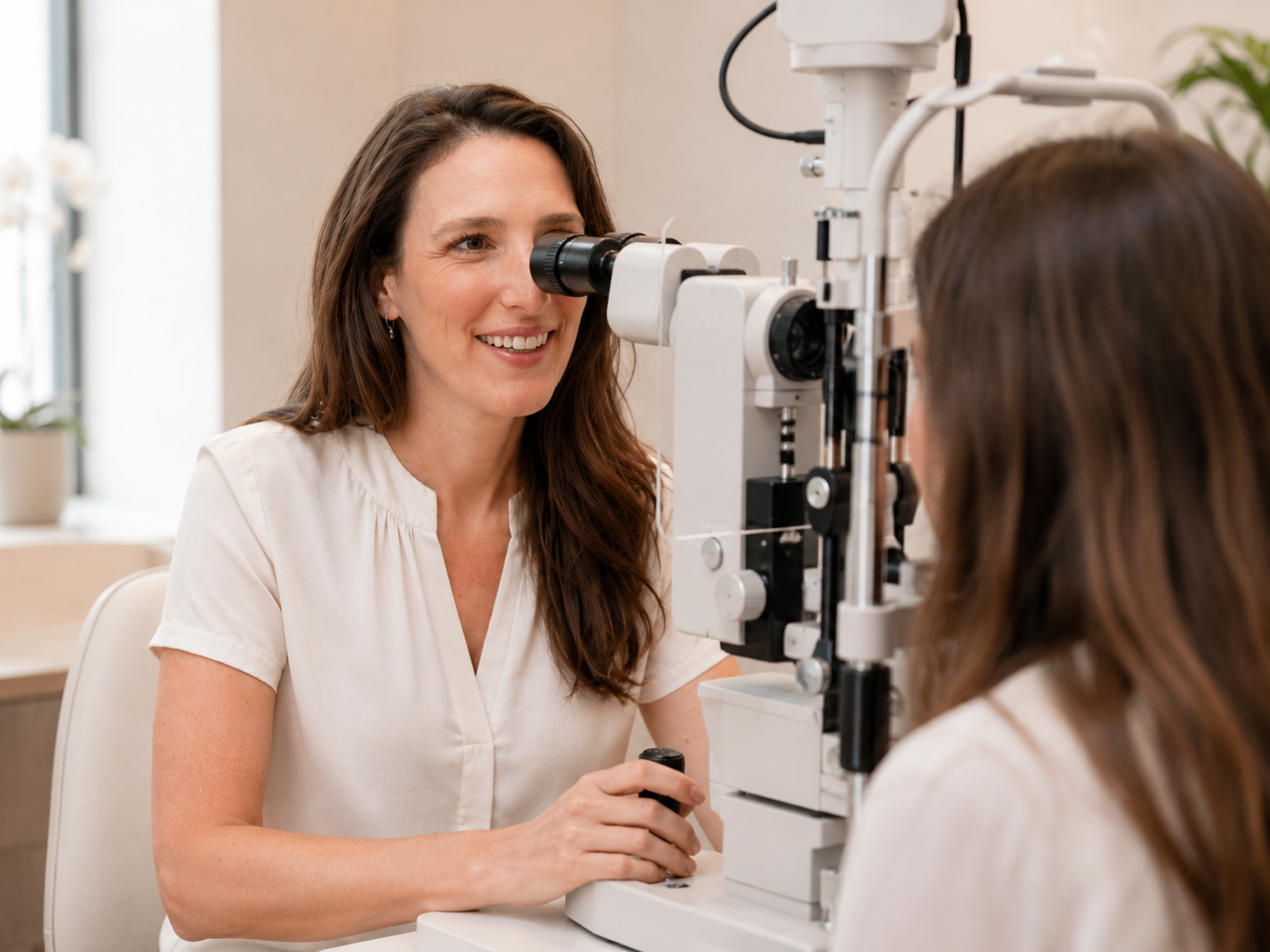
During your consultation, Dr Timlin will assess the eyelid, its laxity and the cause of the ectropion, and advise whether surgery is likely to help and what it would involve.
A watering, irritated eye that is gradually getting worse is worth assessing. A consultation will give you a clear answer, with no pressure to proceed.
Book a ConsultationYour consultation
Your consultation begins with a discussion of your symptoms, including any watering, irritation or soreness, and how they affect you.
Dr Timlin will examine your eyelids, their position and tone, and the surface of your eye, and will work out the underlying cause of the ectropion. This guides the most effective treatment.
She will then explain the options, including the likely benefits, limitations, risks, recovery and fees, so you can decide whether to go ahead.

Recovery
Surgery for ectropion is usually a day-case procedure under local anaesthetic. It is common to have some bruising, swelling and mild discomfort around the eyelid for a week or two, which settles steadily.
A stitch is often placed at the outer corner of the eyelid and is either removed at a short follow-up or dissolves over time. Many patients return to desk-based work within around one to two weeks.
You will be given clear aftercare advice on cleaning the area, using any drops or ointment, and what to expect as you heal.
Risks and realistic expectations
Surgery for ectropion is generally effective and well tolerated, and most patients have a good improvement in comfort and eyelid position. As with any surgery, however, results cannot be guaranteed.
Possible effects include bruising, swelling, a small scar at the outer corner of the eyelid, temporary watering, and, in a minority of cases, under-correction or over-correction that may need adjustment. Ectropion can occasionally recur over time, particularly where the tissues remain lax.
Dr Timlin will explain what surgery can realistically achieve in your case and which risks are most relevant to you.
Fees and insurance
Treatment of ectropion is usually functional rather than cosmetic, because it addresses eye comfort, eyelid position and tear drainage. For this reason it is often eligible for cover by private medical insurance, subject to your policy and your insurer's criteria.
Self-pay treatment is also available. Fees depend on the procedure required, the cause of the ectropion, the type of anaesthetic used and hospital fees.
After your consultation, you will receive a personalised plan and quotation explaining the recommended treatment, the expected costs and what is included.
Ectropion surgery is usually functional and often covered by private medical insurance. Fee guidance is available when you book.
Book a ConsultationEctropion FAQs
The most common cause is age-related laxity of the eyelid tissues. Ectropion can also result from scarring or a shortage of skin, from weakness of the muscles around the eye, or, less often, from a lump pulling on the eyelid.
When the lower eyelid turns outwards, tears can no longer drain through their normal channel, so they overflow and the eye waters. Correcting the eyelid position usually improves this.
Lubricating drops and ointment can ease symptoms and protect the eye, but they do not correct the eyelid position. Surgery is usually needed to restore the eyelid to its natural position.
Ectropion surgery is usually performed under local anaesthetic as a day case, although the approach is tailored to the individual.
A small scar is usually placed at the outer corner of the eyelid or within natural skin creases, and it generally fades to become discreet over time.
It is common to have bruising and swelling for a week or two. Many patients return to desk-based work within that time, with healing continuing gradually.
Most corrections are durable, but ectropion can occasionally recur over time, particularly where the eyelid tissues remain lax. Further treatment can be considered if needed.
Treatment of ectropion is usually functional, so it is often eligible for cover by private medical insurance. Self-pay treatment is also available.
No referral is needed for self-pay consultations; you can book directly. If you hope to use private medical insurance, your insurer may require a referral and supporting information before approving cover.
Book a Consultation
If your lower eyelid is turning outwards and leaving your eye watering, sore or exposed, a specialist assessment can identify the cause and the most effective treatment.
Dr Hannah Timlin will examine your eyelids and eye surface before advising on whether surgery is likely to help and what it would involve.
Reviewed by Dr Hannah Timlin, Consultant Ophthalmic and Oculoplastic Surgeon (GMC 6134773). For general information only, not medical advice.