Eyelid Surgery
Ptosis Surgery and Droopy Eyelid Correction
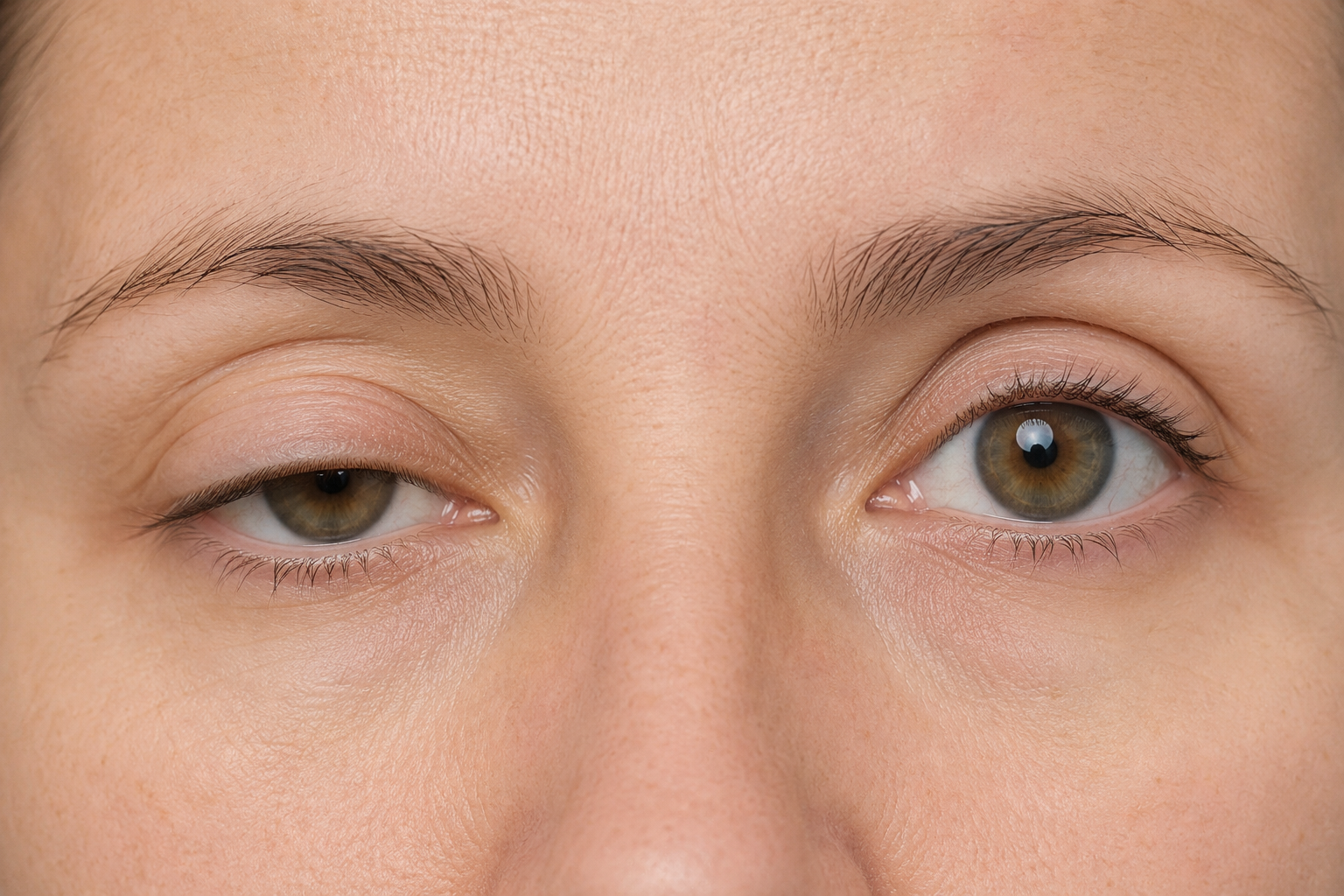
Ptosis is a drooping of the upper eyelid. It can make the eyes look tired or uneven and, when the eyelid sits low enough, it can affect the upper part of your field of vision.
The aim is to restore a more open, balanced and natural eyelid position while protecting the surface of the eye.
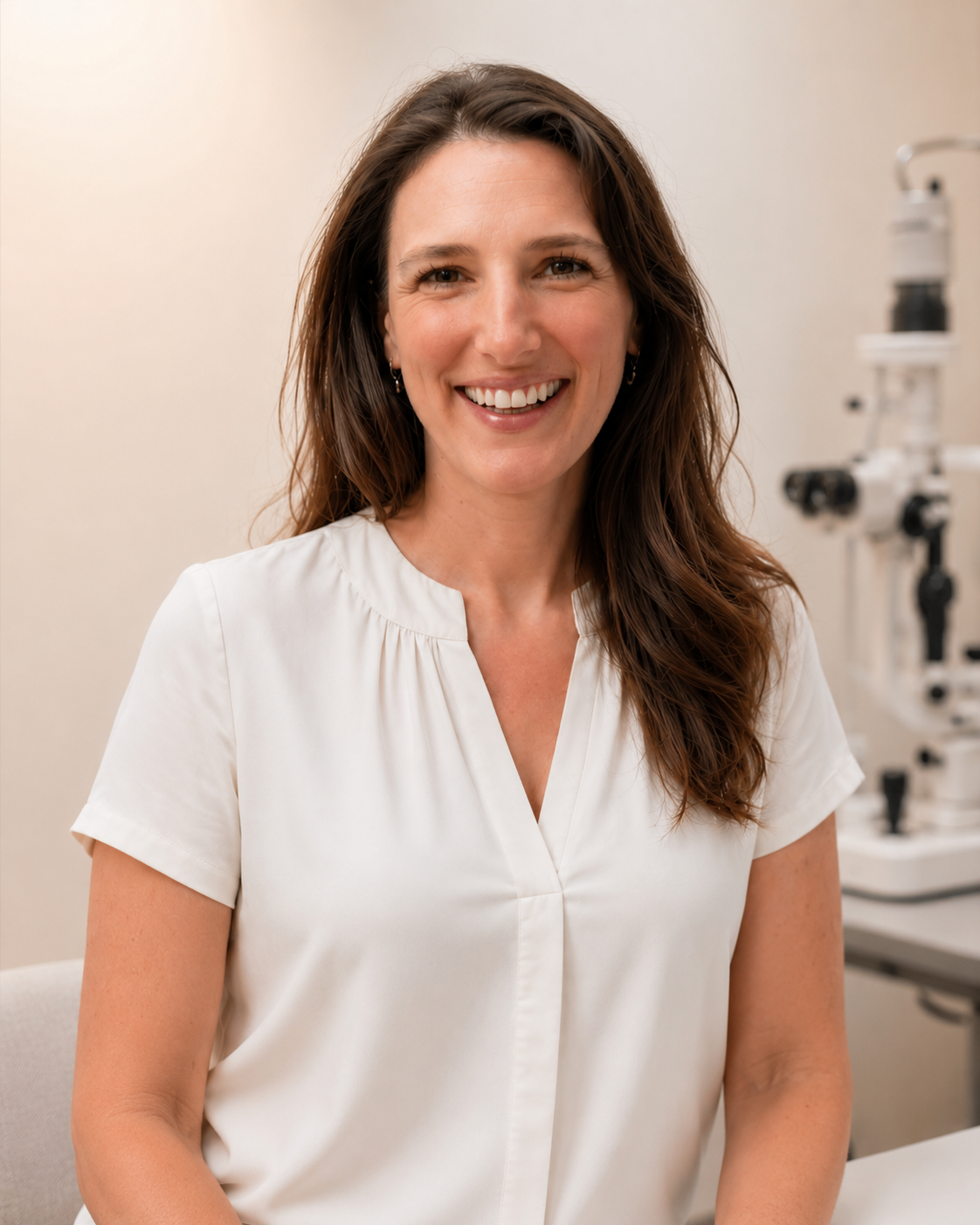
Dr Hannah Timlin offers specialist ptosis assessment and surgery in London. As a consultant ophthalmic and oculoplastic surgeon, she investigates the cause of the drooping eyelid before planning treatment, with careful attention to eyelid height, symmetry, eye comfort and the health of your eyes.
Consultant at Moorfields Eye Hospital · GMC 6134773 · Surgery performed personally by Dr Timlin
At a glance
A quick summary of what ptosis is, how it is treated and what to expect.
What is ptosis?
Ptosis (pronounced "toe-sis") is the medical term for a drooping upper eyelid. The eyelid margin sits lower than usual and may partly cover the eye. It can affect one eye or both, and the two sides are often uneven.
Ptosis is different from hooded eyelids caused by excess skin. In ptosis, the problem lies with the muscle and tendon that lift the eyelid, known as the levator mechanism, rather than the skin above it. Some people have both ptosis and excess upper-eyelid skin at the same time.
When the eyelid droops far enough, it can block the upper part of your vision, and you may find yourself raising your brow or tipping your head back to see. Many people also notice a tired, sleepy or asymmetric appearance.
Why choose an eye surgeon for a drooping eyelid?
A drooping eyelid is not only an appearance concern. It sits right next to the surface of the eye, which must be protected, and it can occasionally be a sign of an underlying muscle or nerve condition.
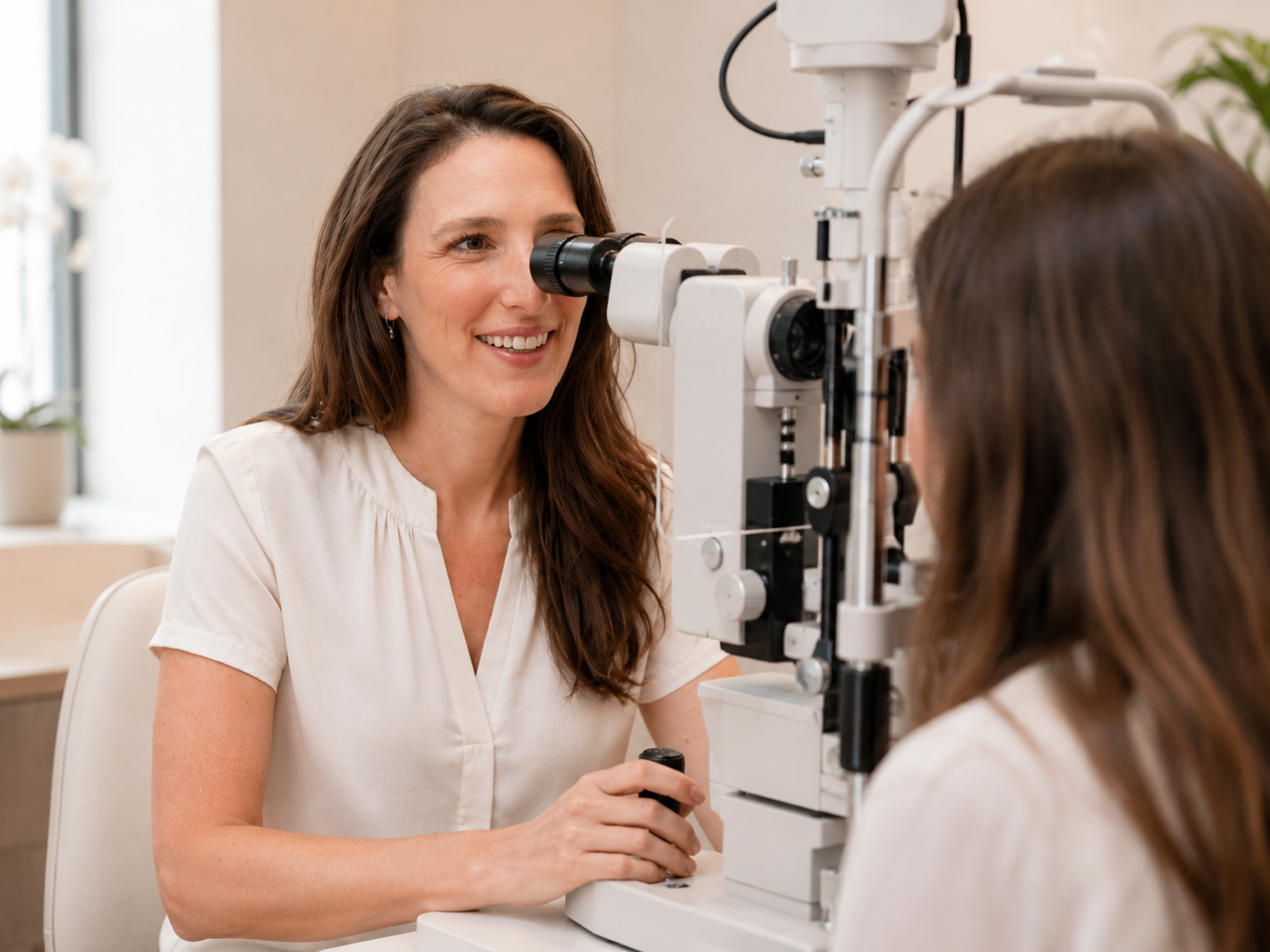
Dr Hannah Timlin is a consultant ophthalmic surgeon with specialist training in oculoplastic surgery, which is surgery of the eyelids, tear ducts and structures around the eye. Her assessment considers how the eyelid functions as well as how it looks.
Before recommending treatment, she will measure your eyelid height and the strength of the eyelid-lifting muscle (levator function), check for asymmetry, assess your eye surface and tear film, and consider whether any underlying cause needs further investigation.
This eye-surgery perspective helps confirm the type of ptosis, choose the safest and most effective procedure, and reduce the risk of problems such as dry eye or difficulty closing the eye after surgery.
Types of ptosis surgery
The right procedure depends mainly on how well the eyelid-lifting muscle (the levator) works, along with the cause and degree of drooping. Dr Timlin will recommend the approach best suited to your eyelid.
Levator advancement (anterior approach)
This is the most common operation for age-related ptosis, where the lifting tendon has stretched or slipped over time. Through an incision hidden in the natural eyelid crease, the levator is reattached or tightened to raise the eyelid to a better position. The same incision allows any excess skin to be addressed at the same time if needed.
Posterior (Muller's muscle) approach
For milder ptosis with good muscle function, the eyelid can sometimes be lifted from behind, with no external skin incision. Suitability is often checked beforehand using eye drops that temporarily lift the eyelid.
Brow (frontalis) sling
When the eyelid-lifting muscle is very weak, as in some cases present from birth, the eyelid can be connected to the brow so that the forehead muscle helps lift it. This approach is used when levator surgery alone would not be effective.
Ptosis surgery is often carried out under local anaesthetic so that eyelid height and symmetry can be checked while you are sitting up and cooperating, which helps fine-tune the result.
Is ptosis surgery right for me?
Surgery may be suitable if your upper eyelid droops and is affecting your appearance, your confidence or your field of vision, and your eye surface is healthy enough for surgery.
Before planning surgery, it is important to understand the cause. Ptosis can be age-related, present from birth (congenital) or, less commonly, related to an underlying muscle or nerve condition. A new, rapidly changing or fluctuating droop, or one accompanied by double vision or other symptoms, needs prompt medical assessment before any cosmetic treatment is considered.
During your consultation, Dr Timlin will examine your eyelids and eyes and advise whether ptosis surgery is appropriate, whether another procedure such as blepharoplasty or brow surgery is more suitable, or whether further investigation is needed first.
The aim is to recommend the right treatment for the cause of your drooping eyelid, not simply to offer surgery.
"I had ptosis surgery and an upper blepharoplasty with Dr Hannah Timlin at the Ezra Clinic. I am absolutely delighted with the results. The ptosis surgery has been a complete success and combined with the upper blepharoplasty it has given my face a more fresh, natural and brighter appearance."
Verified patient review, Trustpilot · Ptosis surgery & upper blepharoplasty
Unsure what is causing your drooping eyelid? A specialist assessment will give you a clear answer, with no pressure to proceed.
Book a ConsultationYour consultation
Your consultation will include a discussion of your concerns and goals, how long the drooping has been present, whether it changes through the day, and any relevant medical history or eye symptoms.
Dr Timlin will measure your eyelid height and levator function, check symmetry between the two sides, and assess your eye surface and tear film. Photographs and a visual-field test may be taken, particularly if the ptosis affects your vision or treatment may be insurer-funded.
She will explain the options available to you, including the likely benefits, limitations, risks, recovery and fees. You will have time to consider your options before deciding whether to proceed.

Recovery after ptosis surgery
Ptosis surgery is usually performed as day-case surgery. Bruising, swelling and some tightness or irritation are common in the first few days, and the eyelid height can look higher or lower than the final result while everything settles.
Many adults return to desk-based work within around one to two weeks. Because the eyelid may not close fully at first, lubricating drops or ointment are often needed for a period to keep the eye comfortable.
You will be given clear aftercare advice, including guidance on wound care, drops, make-up and activity. The final eyelid position, and any scar, continue to settle over several weeks to months.
Risks and realistic expectations
Ptosis surgery can give a meaningful, natural-looking improvement, but eyelid height and symmetry can be difficult to perfect, and all surgery carries risk.
The most common issue is the eyelid ending up slightly too high or too low, or not perfectly matched to the other side. This sometimes needs an adjustment or a further procedure. Because eyelid height needs to be so precise, the chance of needing a revision is higher than for some other eyelid operations.
Other risks include dry eye or difficulty closing the eye fully, changes to the eyelid contour or crease, asymmetry, visible scarring, infection, bleeding and, rarely, more serious eye complications.
Dr Timlin will explain what surgery can realistically achieve for your eyes, what it cannot reliably change, and which risks are most relevant to you and your general health.
Fees and self-pay treatment
Ptosis correction for appearance alone is usually self-funded. When a drooping eyelid significantly affects the field of vision, surgery may be covered by private medical insurance if the insurer's criteria are met, often supported by photographs and a visual-field test.
As a guide, ptosis surgery fees typically range from £3,000 to £5,500. The exact fee depends on whether one or both eyelids are treated, the type of procedure and anaesthetic used, hospital fees, and whether any additional procedure, such as blepharoplasty or brow support, is carried out at the same time. Full guide prices are published on the patient information page.
After your consultation, you will receive a personalised treatment plan and quotation explaining the recommended procedure, expected costs and what is included.
Fee guidance is also available when you book your consultation, so there are no surprises.
Book a ConsultationPtosis FAQs
Ptosis is a drooping of the upper eyelid, where the eyelid sits lower than normal and can partly cover the eye. It can affect one eye or both, and the two sides are often uneven.
Most often it is age-related stretching of the tendon that lifts the eyelid. Other causes include congenital ptosis (present from birth) and, less commonly, muscle or nerve conditions. A new, rapidly changing or fluctuating droop should be assessed promptly.
No. Ptosis is a problem with the muscle that lifts the eyelid. Hooded eyelids are caused by excess skin and are treated with blepharoplasty. Some people have both at the same time.
Yes. If the eyelid sits low enough it can block the upper part of your field of vision, and you may find yourself raising your brow or tipping your head back to see.
Usually it is age-related and not serious. However, a new, rapidly changing or fluctuating droop, or one with double vision, headache or other symptoms, should be assessed promptly to rule out an underlying cause.
By tightening or reattaching the eyelid-lifting muscle (levator advancement), lifting the eyelid from behind in milder cases, or using a brow sling when the muscle is very weak. The choice depends on how well the lifting muscle works.
The aim is symmetry, but exact eyelid height is difficult to guarantee, and a small adjustment or further procedure is sometimes needed to fine-tune the result.
It is often done under local anaesthetic, which allows eyelid height to be checked while you are awake and sitting up. Sedation or general anaesthetic may be considered in some cases.
Many adults return to desk-based work within around one to two weeks, although bruising and swelling take longer to settle. Lubricating drops or ointment may be needed for a time if the eye does not fully close at first.
Incisions are usually placed in the natural eyelid crease or behind the eyelid, so scars are generally discreet, but no surgery is completely scarless.
Age-related ptosis can occasionally recur over time, and a further procedure may be possible if needed. Dr Timlin will discuss the likelihood in your case.
No referral is needed for self-pay consultations; you can book directly. If you hope to use private medical insurance, your insurer may require a referral, photographs and visual-field testing.
Book a Consultation
If your upper eyelid is drooping, a specialist consultation can identify the cause and the most appropriate treatment.
Dr Hannah Timlin will assess your eyelid height, eyelid-lifting muscle, eye surface and overall suitability before advising on the safest and most natural-looking approach.
Reviewed by Dr Hannah Timlin, Consultant Ophthalmic and Oculoplastic Surgeon (GMC 6134773). For general information only, not medical advice.